Dhamrai Karukaj Limited
A family foundry and pottery in its fifth generation, casting solid brass by the lost-wax cire perdue method practised in Dhamrai for more than 500 years, alongside pit-fired Faridpur river clay. All brass is sourced from recycled scrap. European orders ship from Utrecht.
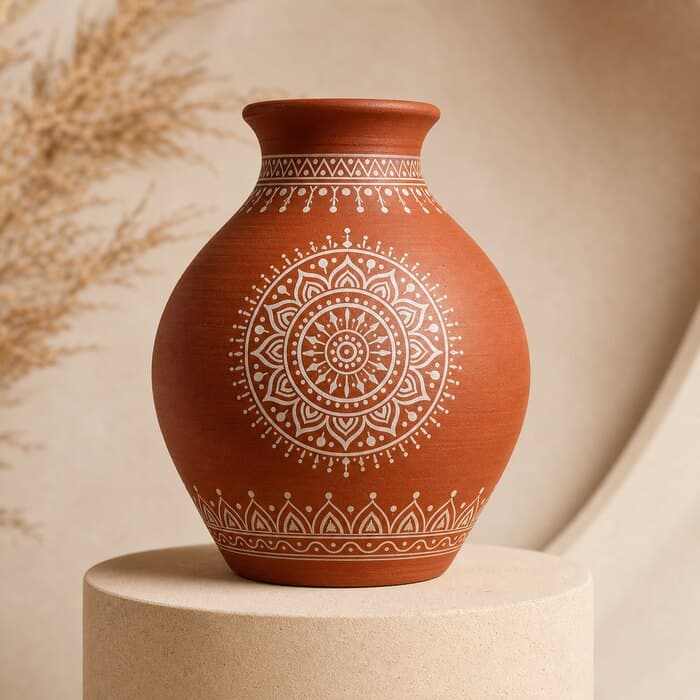
Thrown on a kick wheel from Dhamrai river clay and painted with alpona — the white rice-paste motifs Bengali women traditionally draw on thresholds at festival time, here rendered in durable mineral pigment. The lotus (padma) border is applied freehand after the first firing. Left unglazed, so the surface keeps the matte warmth of raw terracotta. Use a liner for fresh flowers.
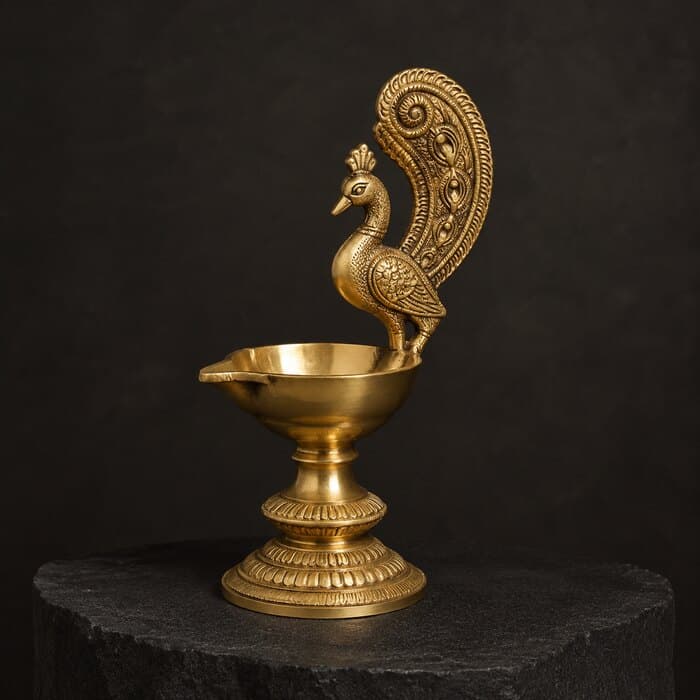
A standing pradip oil lamp cast by the cire perdue method: the form is modelled in beeswax, packed in clay, then fired so the wax runs out and molten brass takes its place. The mould is broken to release each casting, so every lamp is by definition unique and carries faint tool marks from hand-finishing. Dhamrai has cast brass this way for more than five centuries; the workshop uses recycled scrap brass exclusively. Left unlacquered so it darkens naturally.
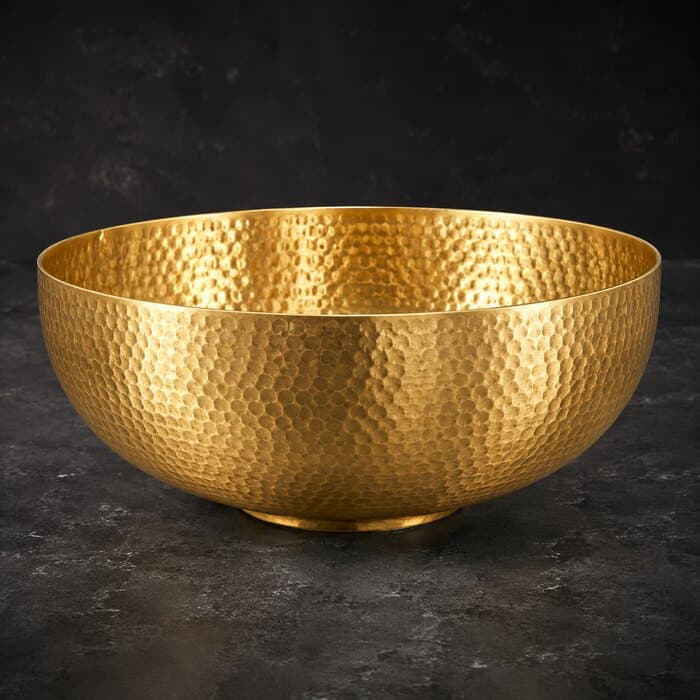
Raised from a flat brass disc over a pit anvil by the kansari metalsmiths of Isampur, one of the last villages in Jamalpur still forging by hand rather than spinning on a lathe. Thousands of hammer blows work the metal outward, leaving the faceted planished surface that catches light differently at every angle. Cast from recycled brass. Used as a serving, fruit or ritual offering bowl.
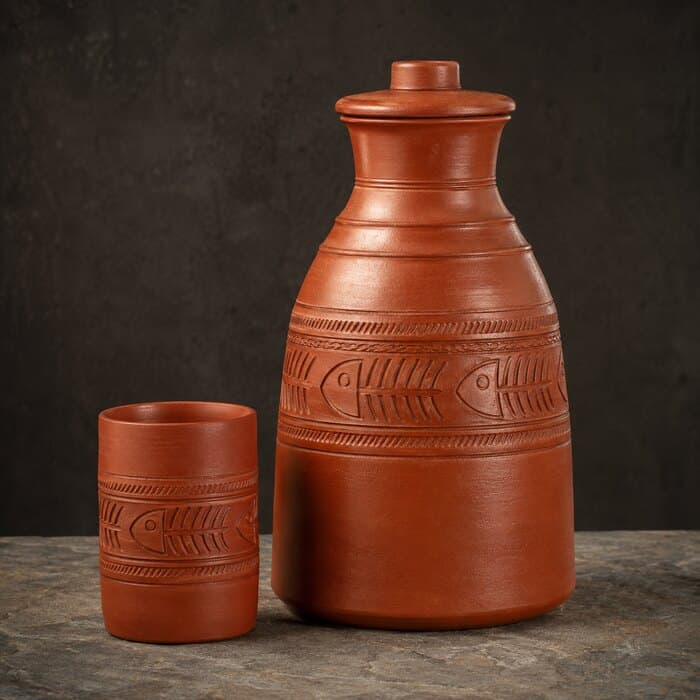
A carafe and matched cup thrown from Faridpur red clay and fired in an open pit rather than a kiln, the method local potters have always used. Left unglazed, the porous wall lets a little water seep and evaporate, which cools the contents by several degrees — the same principle as the traditional matka. Rinse with cool water only; detergent is absorbed by the clay.