Sonar Bangla Karushilpa Limited
A weaver-owned cooperative of 240 households across Rangpur, Sylhet and the Chittagong Hill Tracts, specialising in jute, bamboo and wild sea-grass. Founded in 2009 as a fair-trade alternative to middleman buying, the collective pays piece rates 40% above the regional average and consolidates all European wholesale orders through its Rotterdam warehouse.
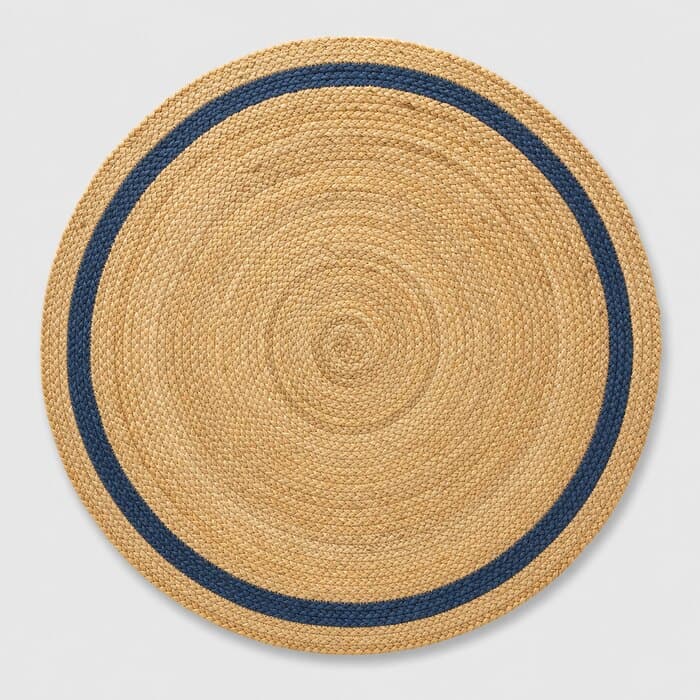
A round floor rug braided by hand from raw golden jute, worked in the rice-stalk (dhaner sheesh) pattern that Rangpur weavers have used for generations. A single rug takes roughly two days at the braiding frame, and the coil is stitched rather than glued so it lies flat without a latex backing. The outer ring is dyed with natural indigo, which softens over time into a muted blue-grey. Suited to hospitality lobbies, showrooms and residential living spaces.
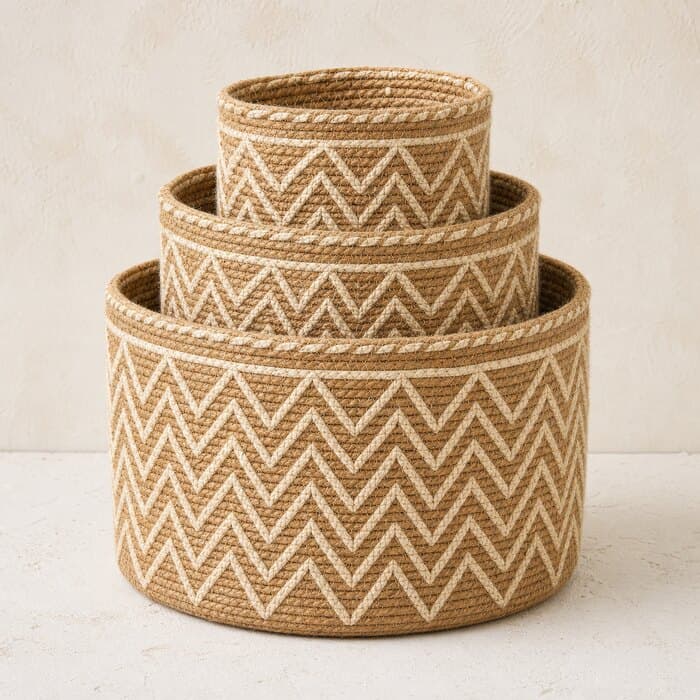
A nesting trio of coiled jute baskets bound with organic cotton thread, made by women's weaving groups along the Shitalakshya river. The coil is built up in a continuous spiral so the walls hold their shape without wire or plastic reinforcement, and each basket nests inside the next to keep shipping volume low. Widely used for retail shelf display, nursery storage and hotel bathroom amenities.
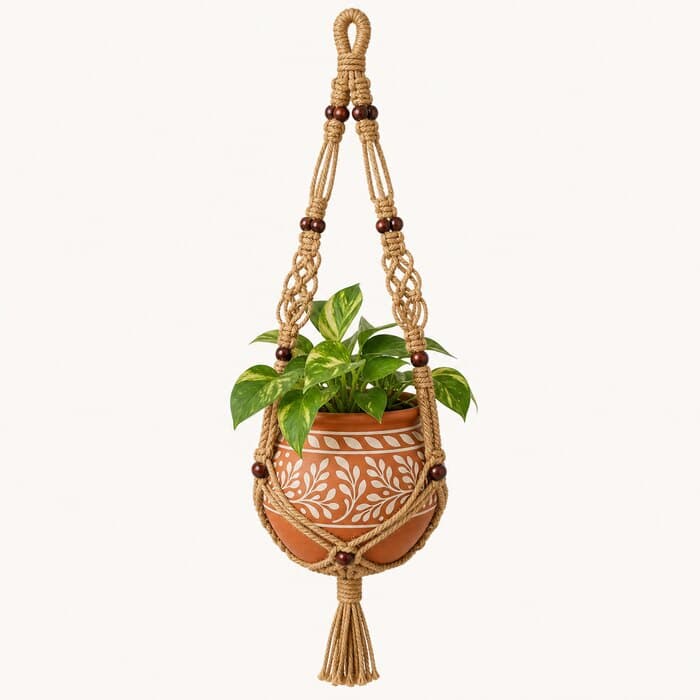
A four-strand macramé hanger knotted from twisted golden jute, sized for the 15–22 cm pots most commonly sold with indoor foliage plants. Knotted entirely by hand in Mymensingh home workshops, with a spliced loop at the crown rather than a metal ring so the whole piece stays biodegradable. A dependable high-volume line for garden centres and plant retailers.
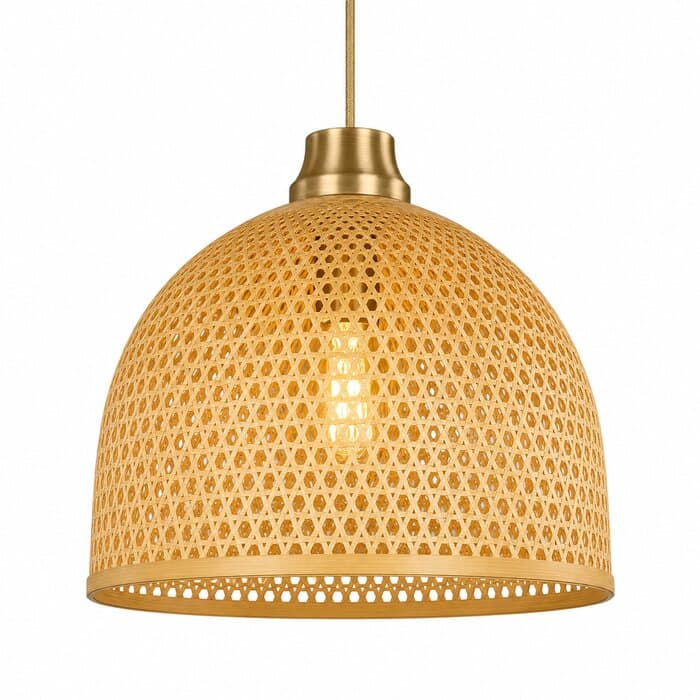
An open-weave pendant shade built from muli bamboo splints split by hand to under two millimetres, then woven over a former so the mesh holds its dome without an internal frame. The weave throws a patterned light across walls and ceiling. Fitted with a solid brass E27 lampholder; supplied without flex or bulb so buyers can specify to local wiring standards. Roughly six hours of work per shade.
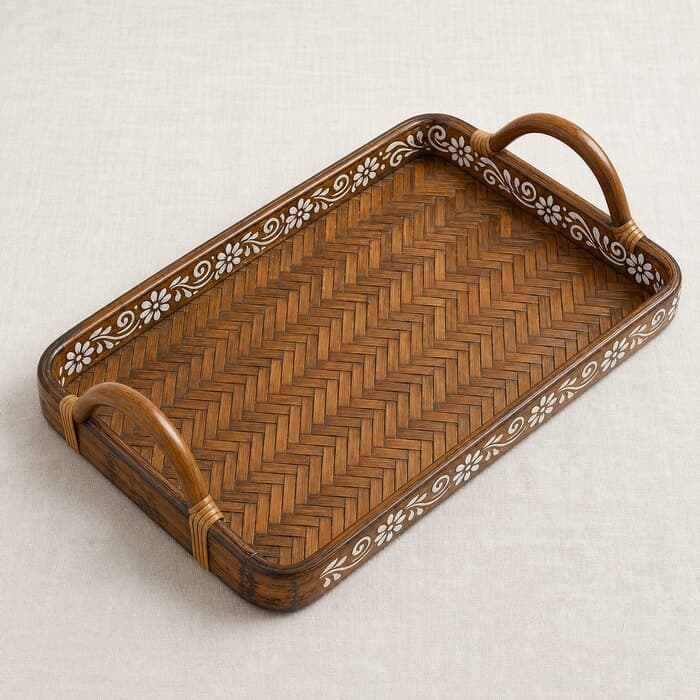
A rectangular serving tray with a steam-bent bamboo rim and a close lattice base. The bamboo is smoke-cured over a slow fire before working, a traditional Comilla treatment that deters borer insects and darkens the cane to a warm amber without stain. Corners are lashed rather than nailed. Sized for breakfast service and retail gifting.
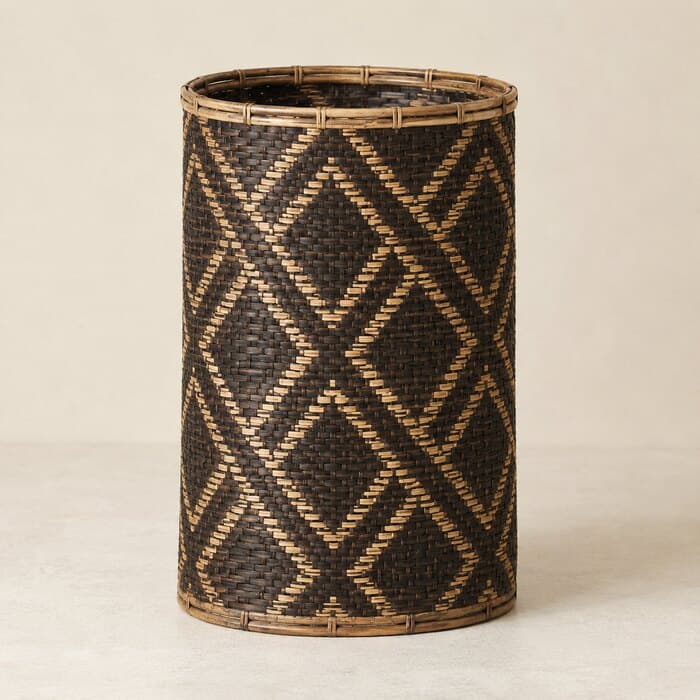
A tall floor basket woven by Chakma and Marma artisans in Rangamati using a diagonal tribal weave passed down through the Chittagong Hill Tracts. Wild bamboo is split for the body and bound with rattan cane at the rim and base, giving enough rigidity to stand loaded without slumping. Sold widely for laundry, firewood and blanket storage.
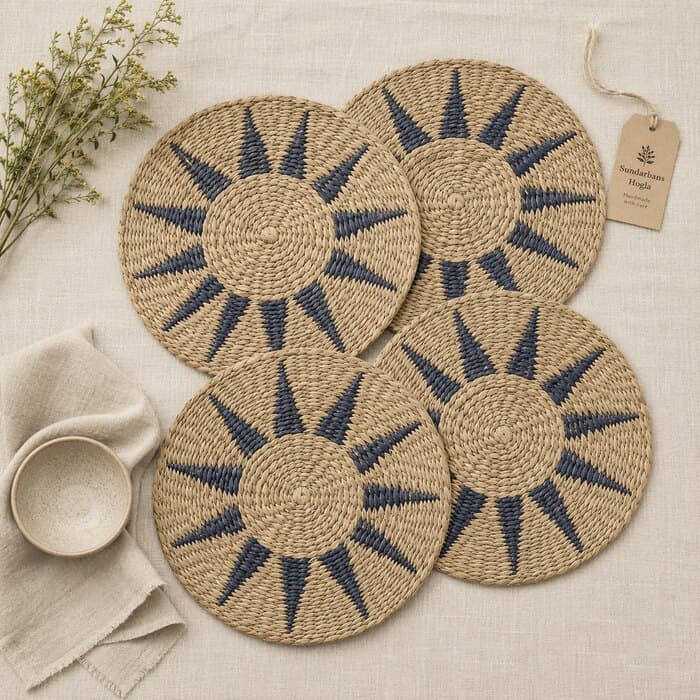
Braided from hogla, the wild reed that grows through the tidal margins of the Sundarbans and is harvested and sun-dried without cultivation. The leaf is plaited into a rope then coiled and stitched into a round mat, giving a dense surface that insulates against hot dishes. Undyed, so the colour varies slightly by harvest season. Sold as a set of four with a short twenty-day lead time.
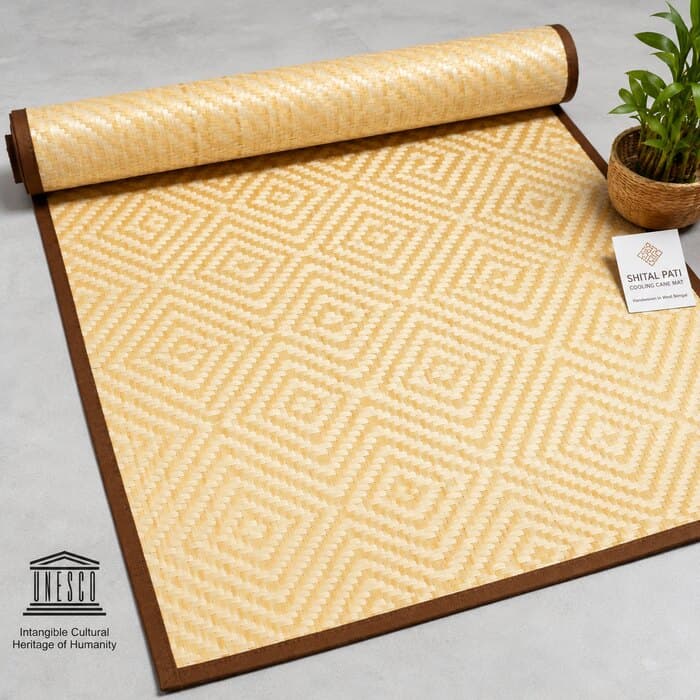
Shital pati means 'cool mat', and the name is literal: murta cane is split into ribbons finer than a millimetre and woven so tightly that the surface stays cool against the skin in humid heat. UNESCO inscribed the craft on its Intangible Cultural Heritage list in 2017. A mat this size takes a Sylhet weaver around ten days. Sold as a floor mat, sleeping mat or wall hanging; roll rather than fold for storage.
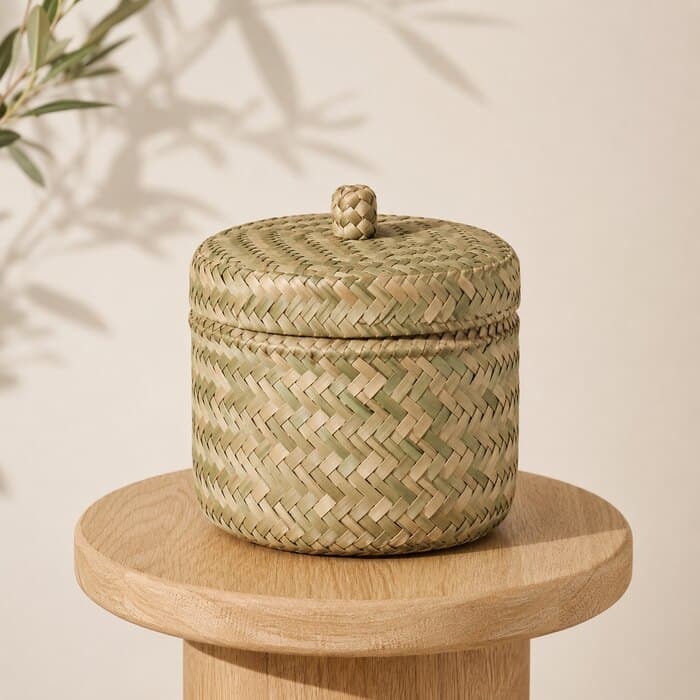
Woven in a tight twill from date palm fronds cut during the winter sap season in Jessore, when the leaf is at its most pliable. The fronds are sun-dried for a fortnight before working, which sets the pale straw colour and keeps the weave from loosening. The lowest-cost basket in the range and the strongest performer at volume — commonly bought for retail bulk-bin display and shelf storage.
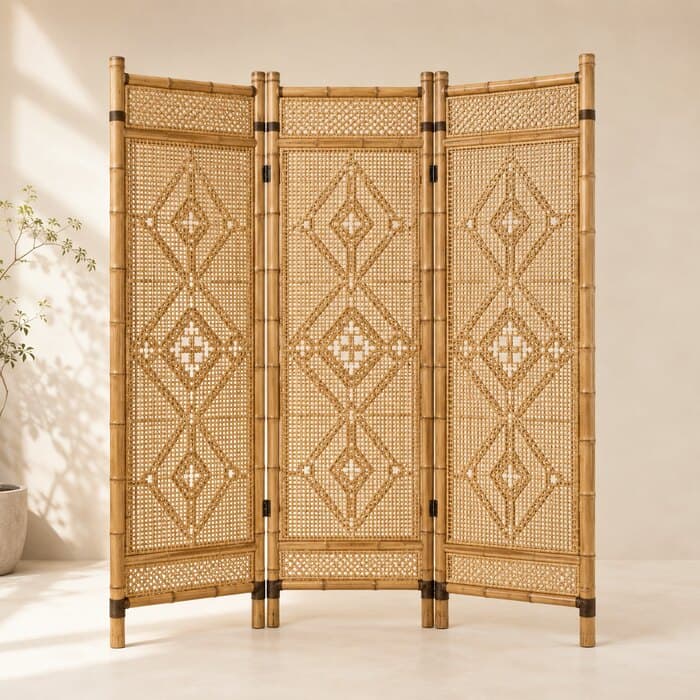
A three-panel folding screen from Kushtia, where bamboo joinery is still cut and pegged without metal fixings. Solid bamboo poles form the frames and fine cane slats are woven across them in a half-open pattern that filters light while keeping sightlines broken. Panels are hinged with waxed cotton cord so the screen folds flat for storage. Around three days of work per screen; specified regularly for restaurants, spas and studio apartments.
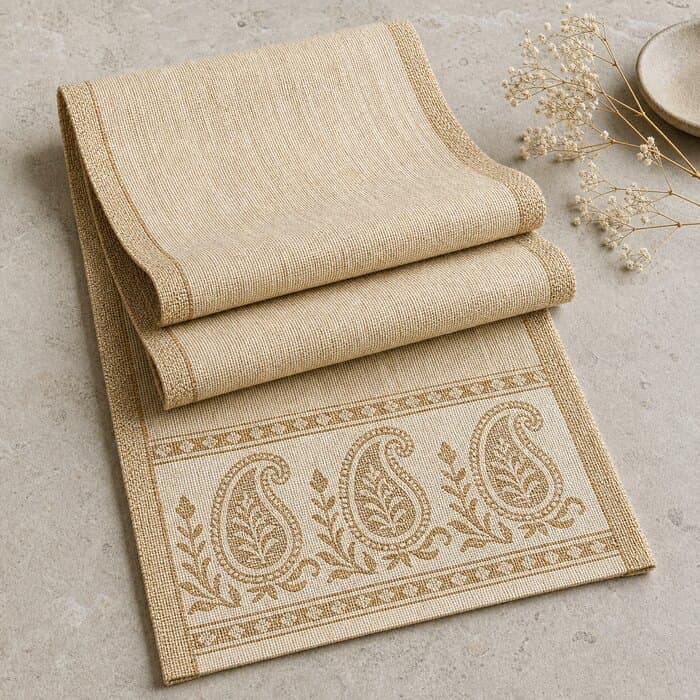
Woven on traditional pit looms in Tangail, a district known for handloom weaving since the Mughal period. Fine jute is shot across an unbleached linen warp to give a textured band that resists creasing, and the fringe is hand-knotted rather than overlocked. At 180 cm it dresses a standard eight-seat table. Popular with restaurant groups and homeware buyers.